

Project 10
Decentralizing Cooperatives
A Web 3.0 UX study on how blockchain could increase member participation in cooperative organizations through incentivization.
Web 3.0 / UX Research
Blockchain
Role
UX Research, UI Design
Timeline
10 Weeks
team
Blessing Emole, Kristine Yang, Nancy Chan, Theresa Merchant, and Rithika Repakula
platform
Mobile
Tools
Adobe CC, Figma, Miro
Background
This study looks into the key issues platform cooperatives face how they're run, managed, and how decisions get made and explores how the affordances of blockchain can ease those technical challenges. Researching different coop governance models, we set out to find a balance between the democratic nature of a coop and funding from investors.
What is a coop?
A company owned and democratically run by its member-workers.
What is a platform coop?
A coop that uses web- or app-based technology for its basic functions.
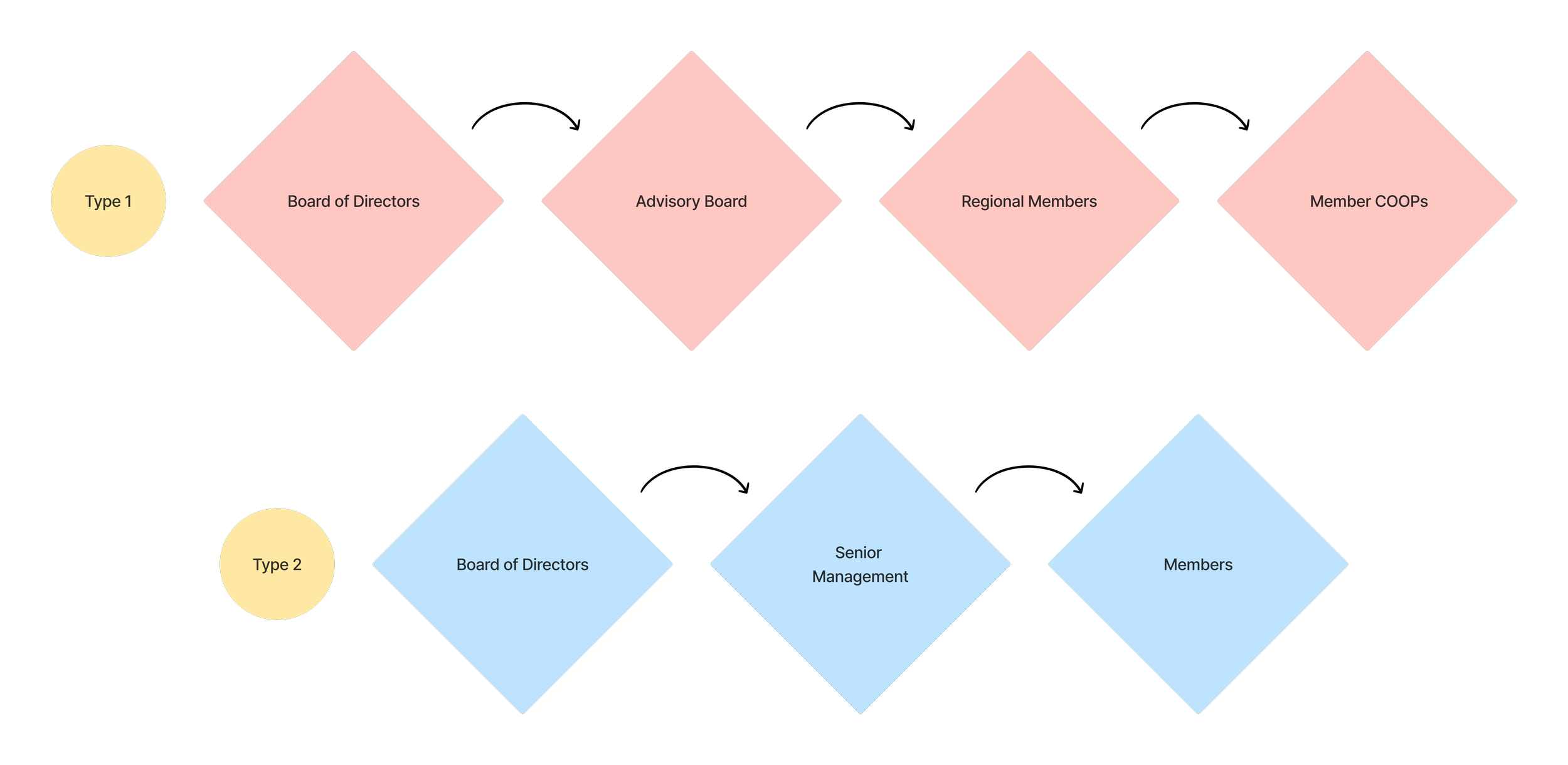
Structure of a Coop diagram.
DAOs vs. Coops
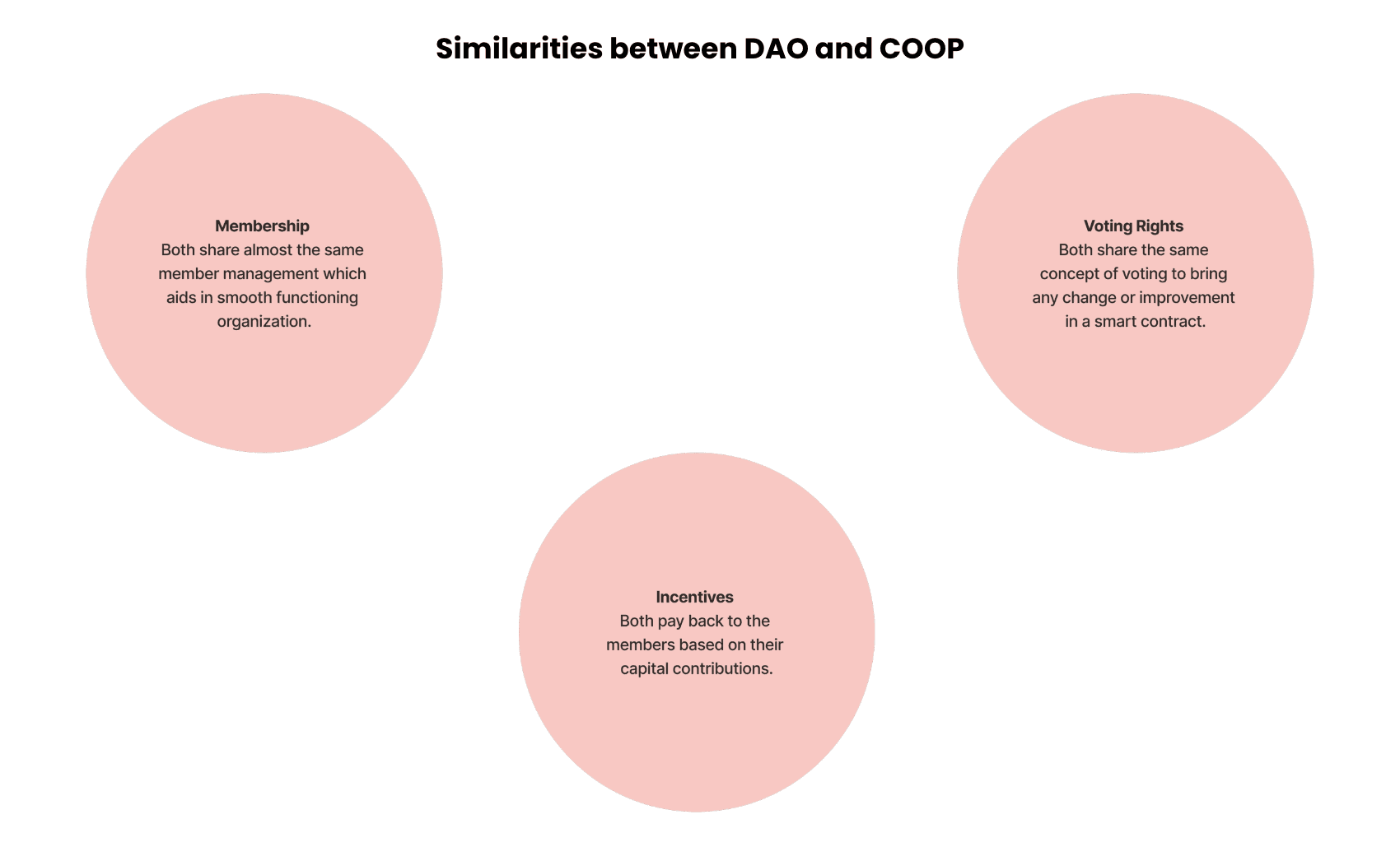
Decentralized Autonomous Organizations (DAOs) already exist on the blockchain: smart contracts automate decisions made by a core team of community members who hold governance tokens, with votes recorded on-chain to stay secure and immutable. One issue: with 1 governance token = 1 vote, power skews toward wealthier members who can buy more tokens. DAOs and coops share a lot: similar membership/member-management models, the same core concept of voting to drive change, and incentive structures that pay members back based on their contributions.
Where DAOs and coops overlap: membership, voting rights, and contribution-based incentives.
Problem Statement
How might we use blockchain to streamline onboarding, increase participation, and make the voting process more transparent for coop members?
Design Directions & Features
We organized the work around five directions - onboarding & education, participation & contribution, reputation building, voting equity, and delegation & distributing power and turned them into concrete features:
Gamified onboarding with tokenized rewards
On-chain recording of contributions
Member profiles
Multi-sig wallet-based voting with a transferable key

Research Methods
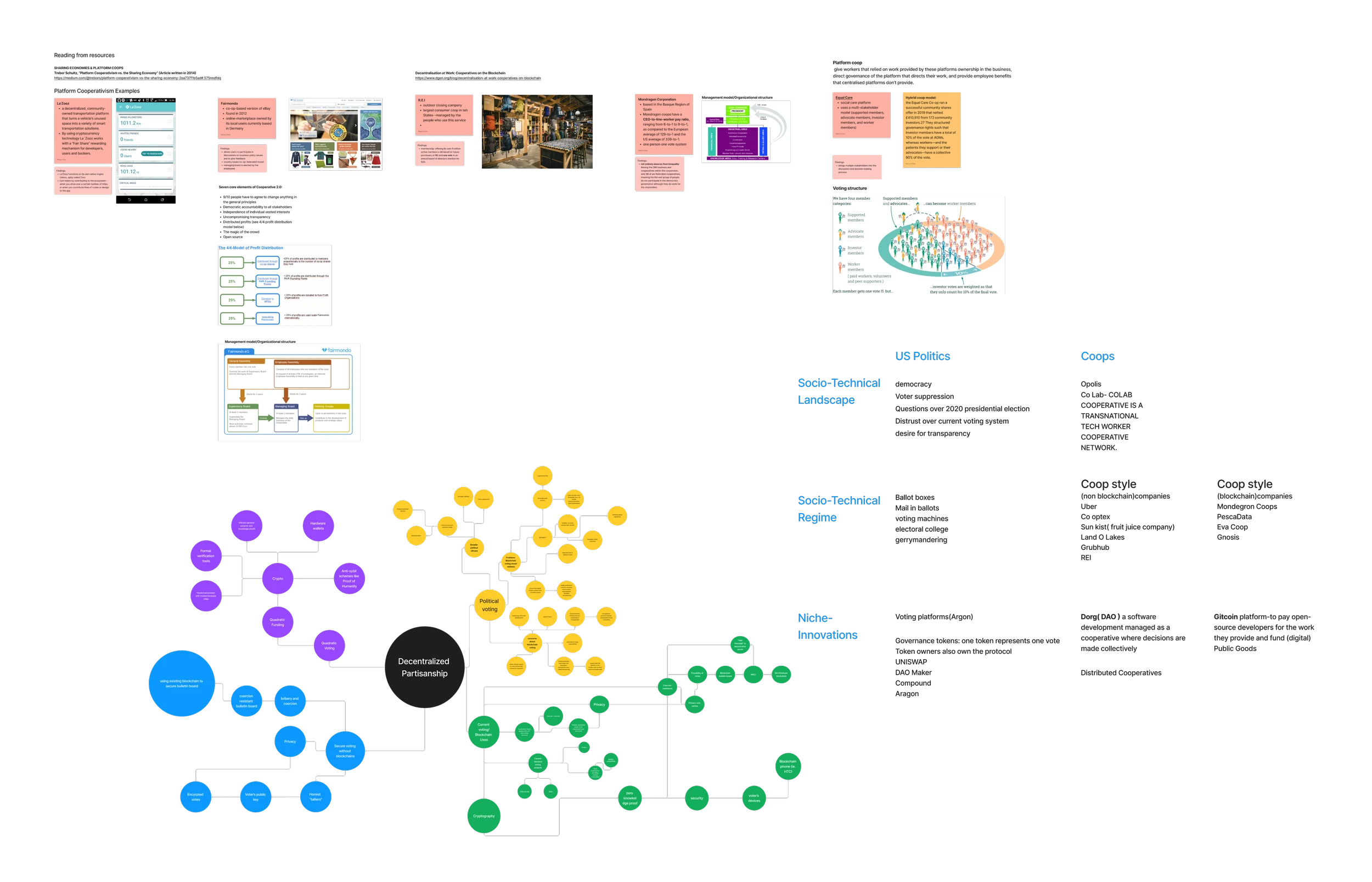
We grounded the concept in structured research: MLP (Multi-Level Perspective), Mess Map, expert interviews, secondary research, and a Rose/Bud/Thorn assessment.
MLP / Mess Map board: Mapping the socio-technical landscape, regime, and niche innovations across US politics and coop governance.
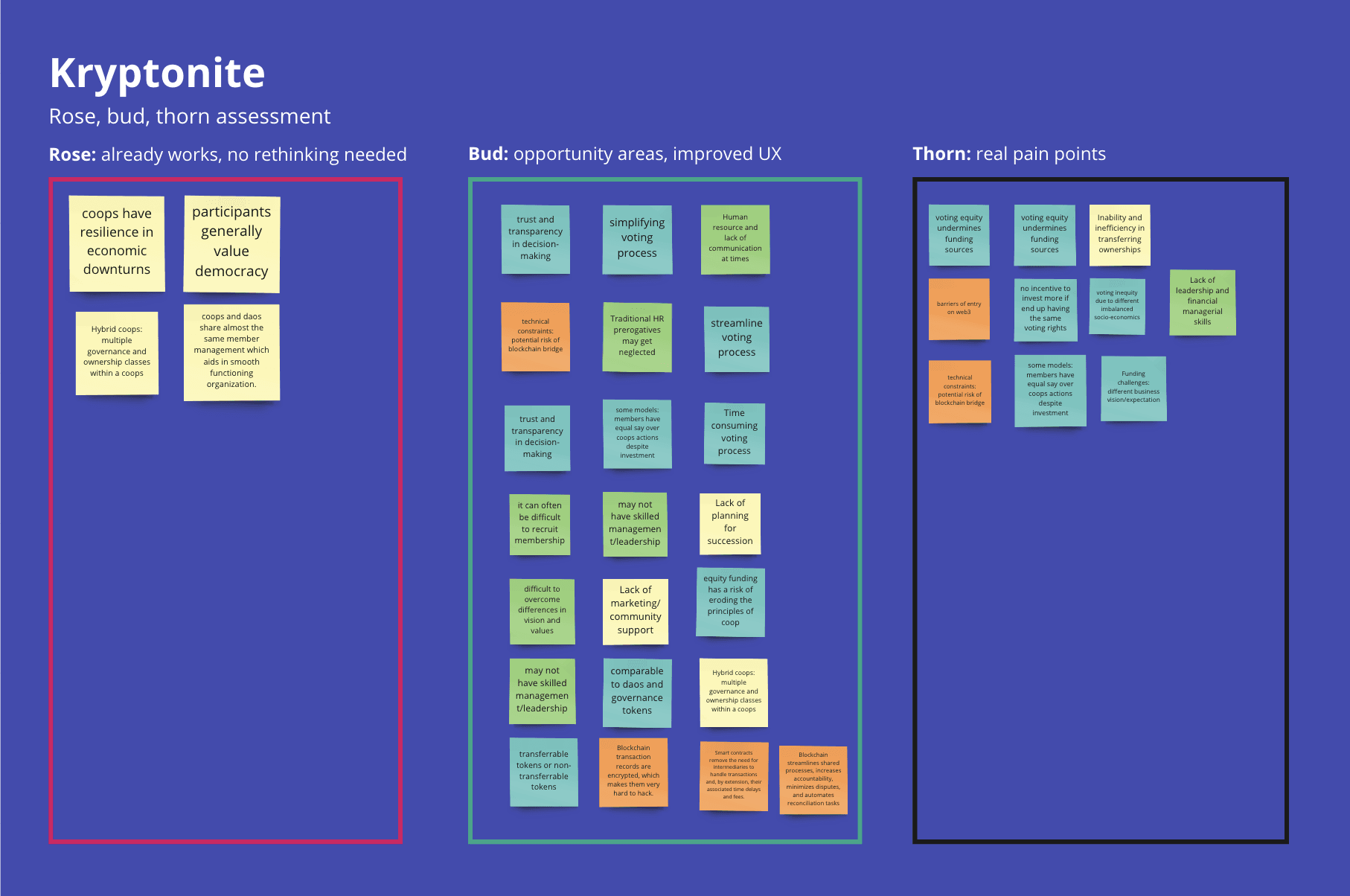
Rose/Bud/Thorn board: Rose (what already works), Bud (opportunity areas), Thorn (real pain points) brainstorming while shaping our design features.
Pain Point → Solution
Pain point: lack of participation and involvement.
Solution: acknowledge each member's contribution to the community and emphasize their sense of ownership in the coop. Contribution can be tangible (volunteering hours) or intangible (finding members, joining forums); credits/tokens are assigned to both, recognizing all kinds of work. The more effort a member puts in, the larger their share, the more you contribute, the more tokens and voting power you have.
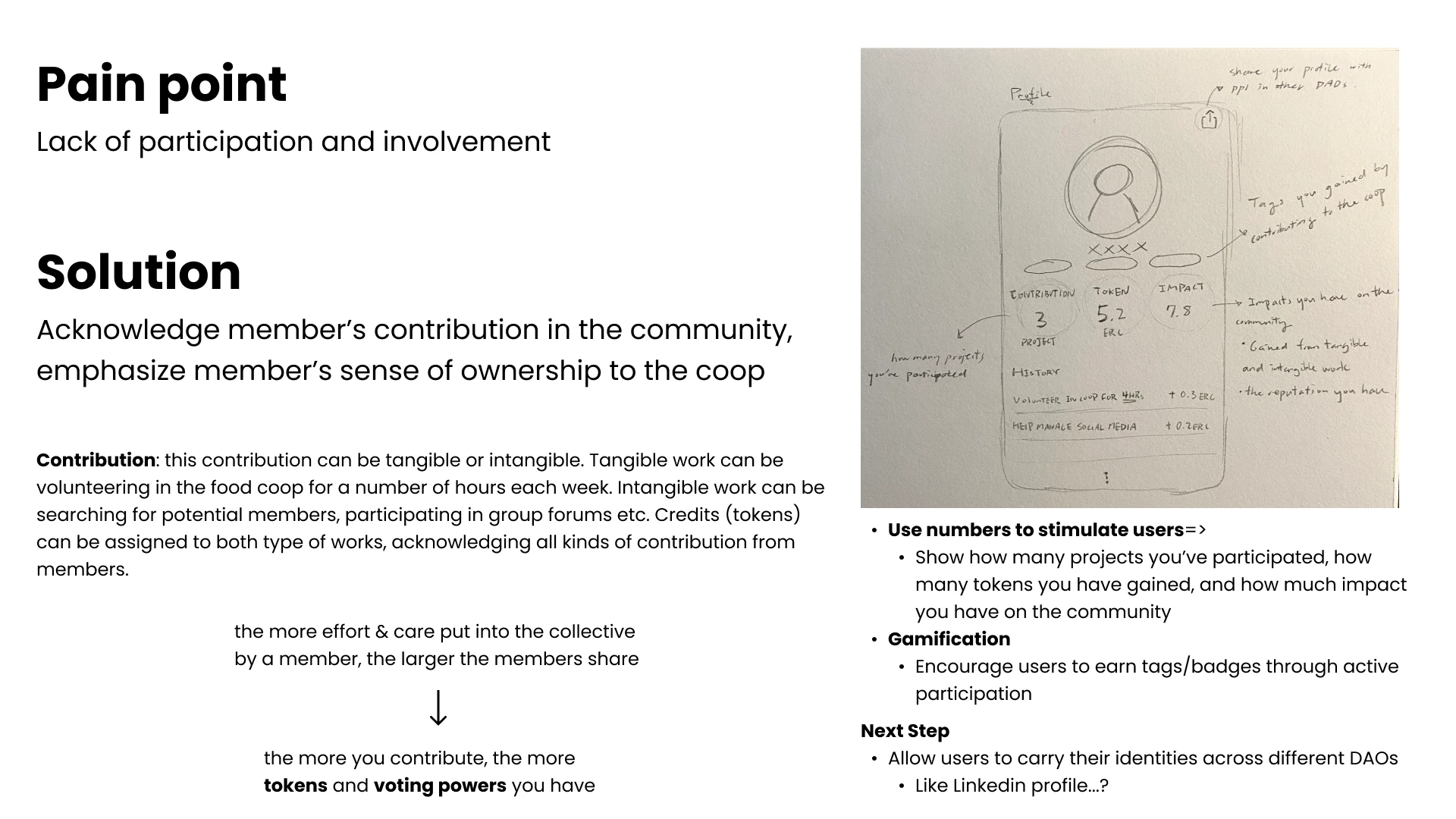
Using numbers to motivate members (projects joined, tokens earned, community impact) and gamification to encourage participation. Next step: let members carry identities across DAOs, like a LinkedIn profile.
Conclusion & Next Steps
The concept shows how blockchain can make coop participation more transparent and rewarding by tying voting power to genuine contribution. A next step we explored: letting members carry a portable, cross-DAO identity so reputation follows them between communities.