

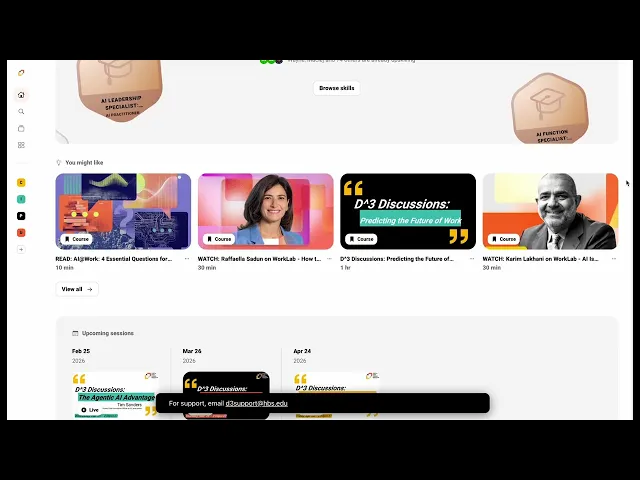
Project 01
Future Proof with AI: Learning Platform
End-to-end UX and visual design for the Harvard Business School AI Institute's online AI learning platform spanning multisite landing pages, checkout, and the Sana.ai learning experience.
Product Design
UX Research · Growth
Role
End-to-end UX & Visual Design (product + growth)
Timeline
1 year
team
4 Enginners, 1 PM, 1 content coordinator, me
platform
Web & Mobile
Tools
Figma, Cvent, Sana.ai, GA4, Google Tag Manager, LinkedIn Insight Tag
Client
Harvard Business School AI Institute (formerlyDigital Data Design Institute)
Overview
I led the end-to-end UX and visual design for the Harvard Business School AI Institute's (formerly the Digital Data Design Institute, D³) online AI learning platform spanning multisite landing pages, product checkout, and the Sana.ai learning experience. The work combined web architecture, accessibility, and visual storytelling to bring Harvard research to learners worldwide.

'Generative AI for Your Role' the platform across web and mobile.
Project Goals
Launch a centralized program hub for AI learning
Design a seamless learner journey across platforms (D³ website → Cvent → Sana.ai)
Build accessibility and multilingual support from the start
Maintain strong Harvard and D³ brand alignment across all touchpoints
Product Overview: Future-Proof with AI
Future-Proof with AI is the Institute's on-demand learning platform, designed to help professionals build confidence and capability in applying AI in real work contexts. It blends research-backed insights, guided exercises, and practical frameworks; through modular pathways, learners take short, self-paced classes and earn Completion Badges to showcase progress. It also includes Perspectives- a curated mix of live sessions, webinars, faculty conversations, and insight articles.
My Role
I owned the product design lifecycle from concept through launch: UX research, user flows, and wireframing; UI and component design across platforms; accessibility and internationalization (i18n); checkout flow design and integration; and developer handoff, QA, and launch support. I also mentored a junior designer on content layout, mobile responsiveness, and system-based design thinking.
Research & Discovery
To design for a global professional audience, I partnered with product managers and content strategists to define learner goals, pain points, and constraints insights that informed platform architecture, navigation patterns, and content hierarchy across the multisite, checkout, and learning experience.
Discovery: journey mapping across web + platform, multilingual content audit, WCAG/Siteimprove accessibility audits, stakeholder interviews + content prioritization, and B2B/corporate expansion planning.
Process timeline:

UX Planning & Design System
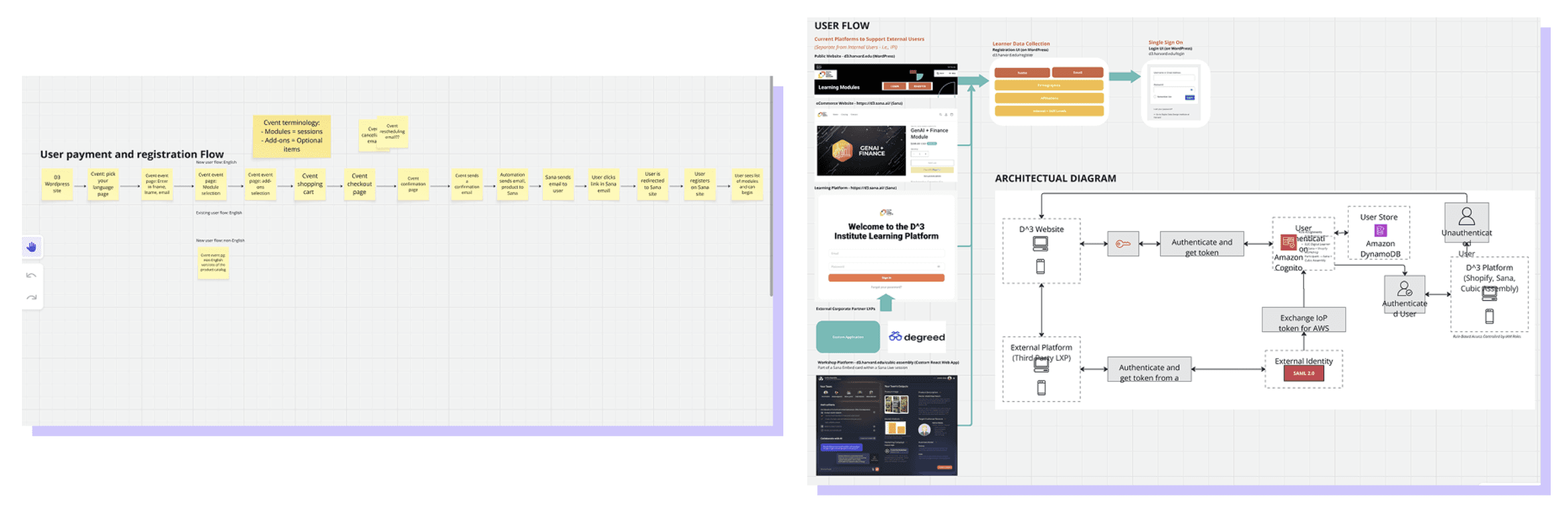
I mapped the full learner journey, from browsing courses to completing enrollment and entering the platform.
The end-to-end learner and payment flow, and the system architecture connecting the D³ website, Cvent, and Sana.ai.
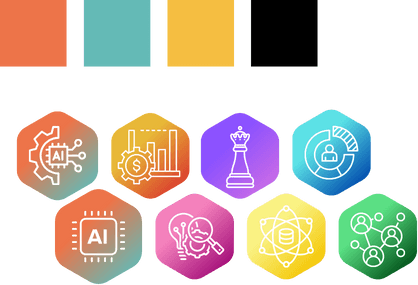
To support consistency and scalability, I created a lightweight design system used across all platforms: a shared icon set tailored to AI-learning concepts, reusable UI patterns for navigation, progress, and content grouping, and accessibility-aligned typography and color — ensuring visual cohesion across the D³ website, Cvent checkout, and Sana.ai while staying flexible for future program expansion.
A shared AI-learning icon set and accessible color system for cross-platform cohesion.
Learning Platform Design (Sana.ai)
The Sana.ai platform is the core learning environment for Future-Proof with AI. I designed the end-to-end experience around modular content structures, clear navigation, and interaction patterns that support self-paced learning for busy professionals letting learners move easily between lessons, track progress and completion, and return to content without friction. Accessibility, readability, and responsive behavior were prioritized for a consistent experience across devices and global audiences.
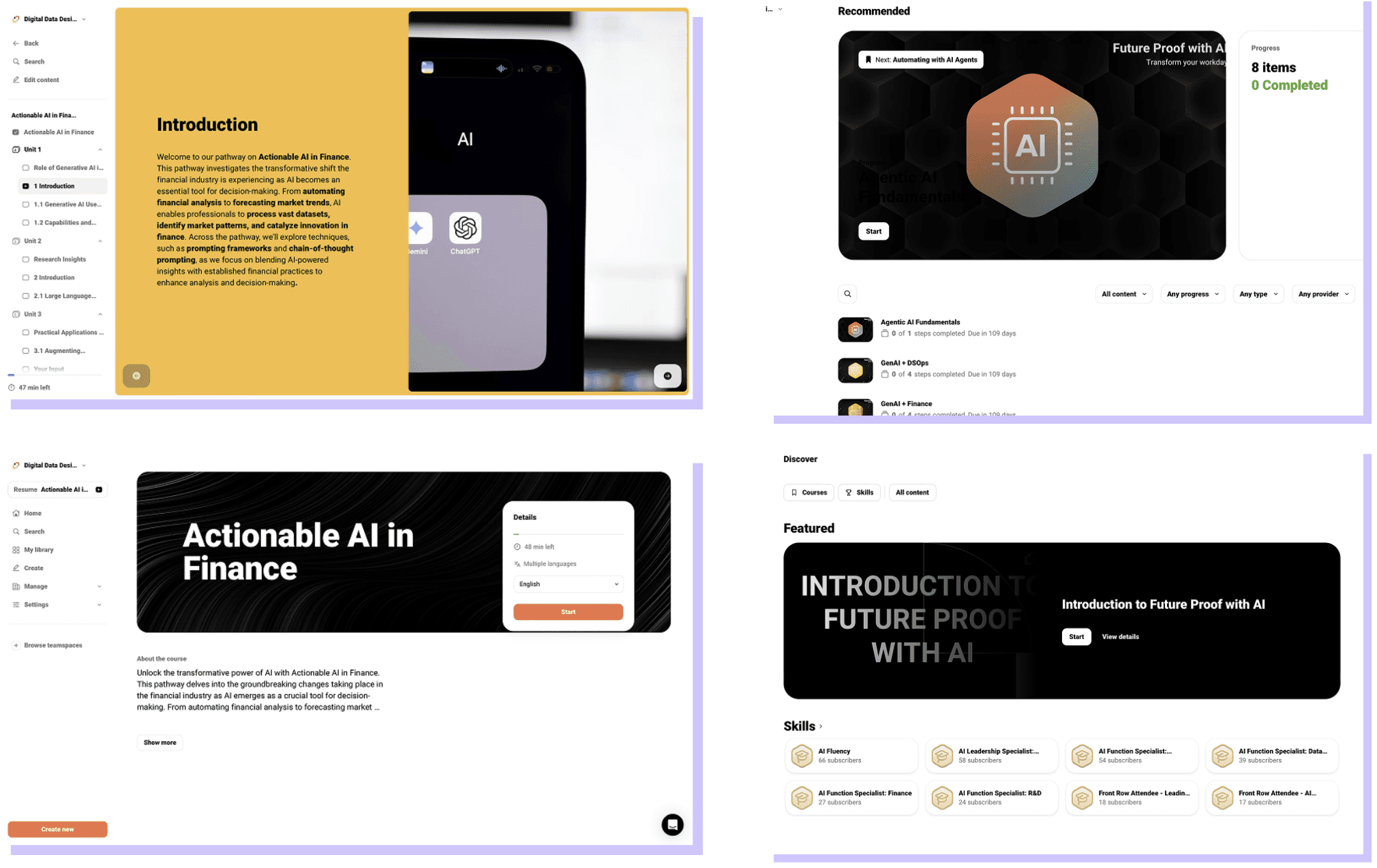
The Sana.ai learning experience: modular lessons, progress tracking, and content discovery.
Checkout Flow Integration
I designed the end-to-end checkout experience using Cvent, ensuring a smooth transition from program discovery to enrollment and onboarding into Sana.ai. The checkout UX accounted for international address and payment variations, accessibility and form clarity, and data security and responsive behavior — using clear visual hierarchy and progressive disclosure to reduce friction at a critical conversion point.

'Transform Your Workday' the program catalog and checkout, designed for international enrollment.
Growth Design & Performance Analytics
Beyond product UX, I led growth-focused design initiatives to support enrollment and engagement, collaborating with communications and content teams to design and measure paid campaigns across Meta, LinkedIn, Harvard Business Review Ads, Google, and newsletters.

Sana AI dashboard + GA4: Tracking learners, active users, and course starts via Sana's AI dashboard and GA4.
What I did:
Integrated and managed Google Tag Manager, UTM tracking, and the LinkedIn Insight Tag to track engagement and conversion
Set up and analyzed campaign performance in GA4 and Sana's AI dashboard, tying ad views and clicks to actual course starts
Designed mobile-optimized, multilingual ad creative in 5 languages
Created and tested variations based on audience segmentation

Multilingual campaign creative and Completion Badge designs across the program.
Outcomes & Impact
23% increase in engagement on the new catalog multisite, with higher registration completion
Launched multilingual support across 3 languages (platform/landing content, including Spanish)
Enabled a seamless transition from discovery to the learning platform
Created a reusable, scalable system for future education launches and a modular design foundation for ongoing product and campaign growth
Boosted click-through rates by iterating on ad layout and hierarchy from A/B testing
Built a reusable, brand-aligned design system for ad campaigns, and generated reports for comms and leadership on top-performing creative to inform future spend
Reflection
This project reinforced the importance of designing education products as systems aligning product UX, accessibility, and growth strategy to support global scale. By unifying discovery, enrollment, and learning into one cohesive experience, the platform enables long-term engagement with AI concepts while staying adaptable as the field evolves.